Blog
When optimization gets practical
Customer stories, technical guides, and deep dives into 3D content optimization pipelines.
Categories
Tags
Search results

Bake vertex colors into textures
In this blog we'll look at how to bake vertex colors into textures. Use case for this is certain phot scanned assets where color data is saved into vertex colors. We'll look at how to do this with both the remesher and aggregator pipeline. We'll also cover how to create a shading network for vertex colored materials as well as how to remove vertex colors from model post processing.
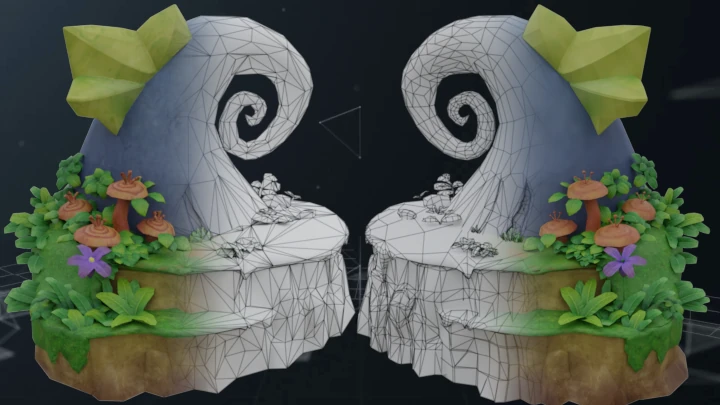
Aggregation and remeshing - Evaluating the best method for proxy creation
After reading this blog post, you will have a framework to evaluate the best method to create proxies for your game. The post will compare the remeshing and aggregation methods for generating proxies for your asset collection, and delve deeper into how to decide which method is best for your game.
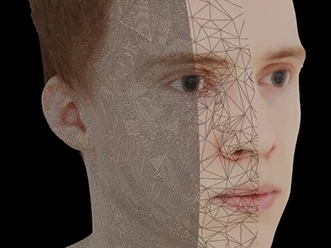
Simplygon supporting NVIDIA's new Micro-Mesh technology
With NVIDIA's new Micro-Mesh technology, developers will be able to continue their quest to fill their worlds with content. The technology removes many of the traditional bottlenecks, releasing creators from many of the shackles that previous generation hardware had put on them. We at Simplygon have been working closely with NVIDIA to ensure that can use our SDK to transform your meshes to be ready for your Micro-Mesh render pipeline.
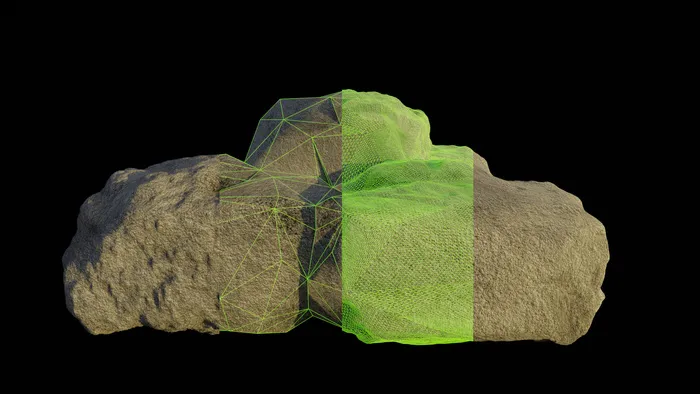
Accelerated remeshing using tessellated attributes
With Simplygon 10.0 we introduced tessellated attributes. In this post we'll showcase how to use them to speed up high resolution remeshings where we only care about surface details.
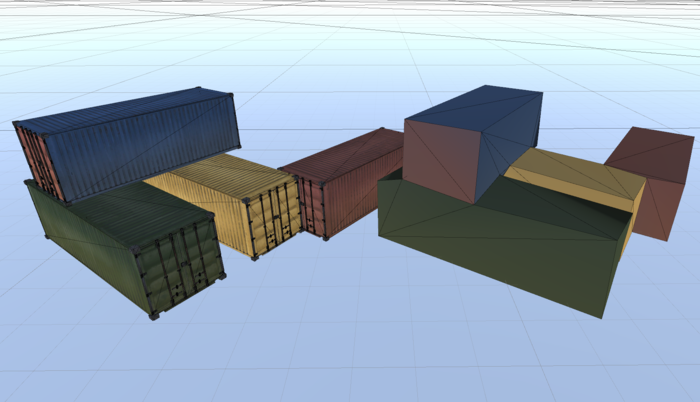
Bake textures into vertex colors
In this post we are going to bake textures into vertex colors. This is useful for LODs which are really far away, where we just want some color. In order to do this, we need to disable sRBG on all texture nodes in the scene. So we'll cover how to traverse shader network as well.
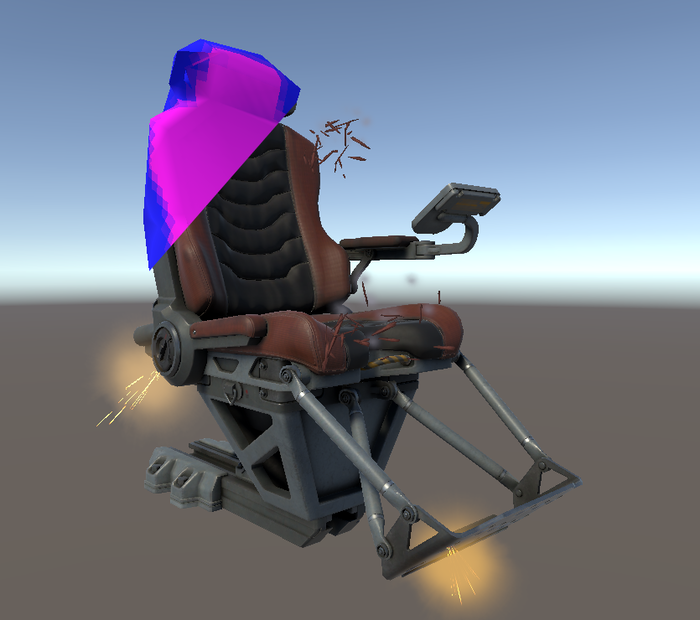
Bake material data into textures for Unity physics meshes
Physics meshes are used in almost every 3d game. It is also very common that we want to know the different materials of the physics object for spawning certain impact effects. In this post will showcase how to optimize a physics mesh and keep material data in Unity as a texture.
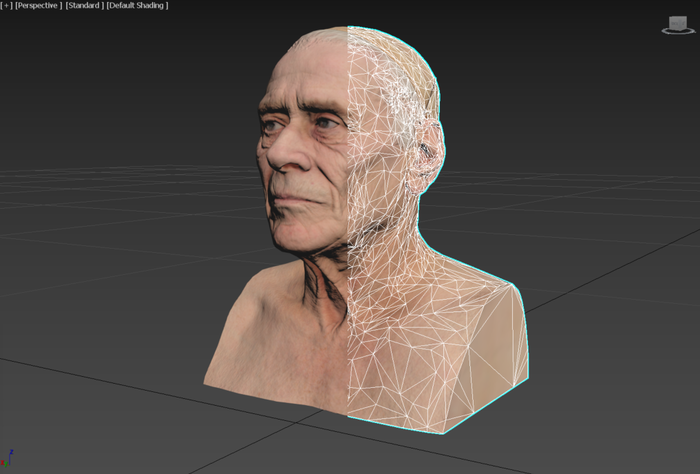
Your first remeshing in 3ds Max
In this post we'll introduce how to use the Simplygon plugin for 3ds Max and use it to remesh a very high poly model.
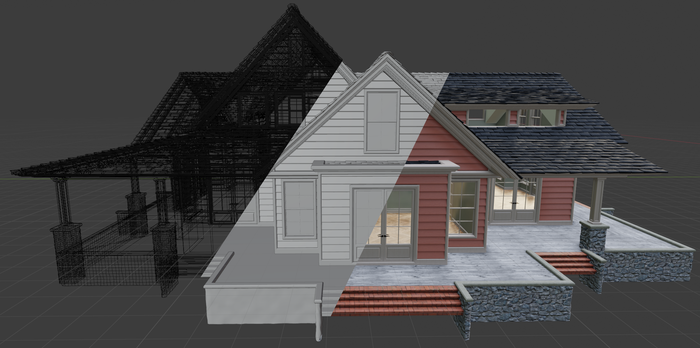
How to remesh your house with Simplygon
There are many objects which have different types of materials; both transparent and opaque. Remeshing these with Simplygon requires extra care if one wants to preserve the transparency. In this example are going to optimize a house with glass windows, a quite common asset in many games.
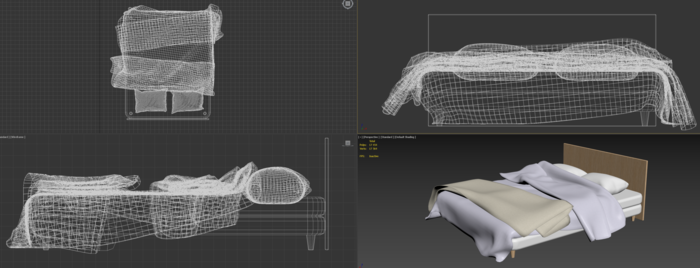
Remeshing interior design assets in 3ds Max
In this post we will create a proxy for an interior design asset using the 3ds Max Simplygon plugin. We will both use the basic remeshing with material baking template but also the advanced remeshing template to unlock some advanced optimization settings.
Custom material casting using mapping image
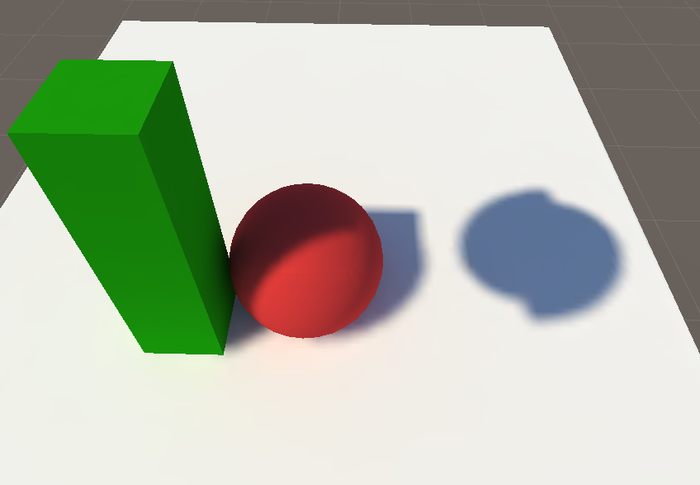
In this example we'll show how you can use the mapping image directly to do a custom material casting.
Use geometry data caster to change materials on a remeshed asset
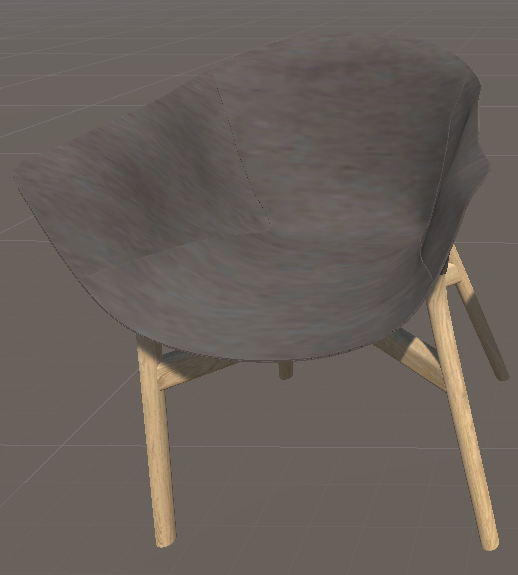
In this example we'll show how you can use geometry data casting to change materials on a remeshed asset in runtime.
Remeshing terrain chunks for hierarchical LODs in C++
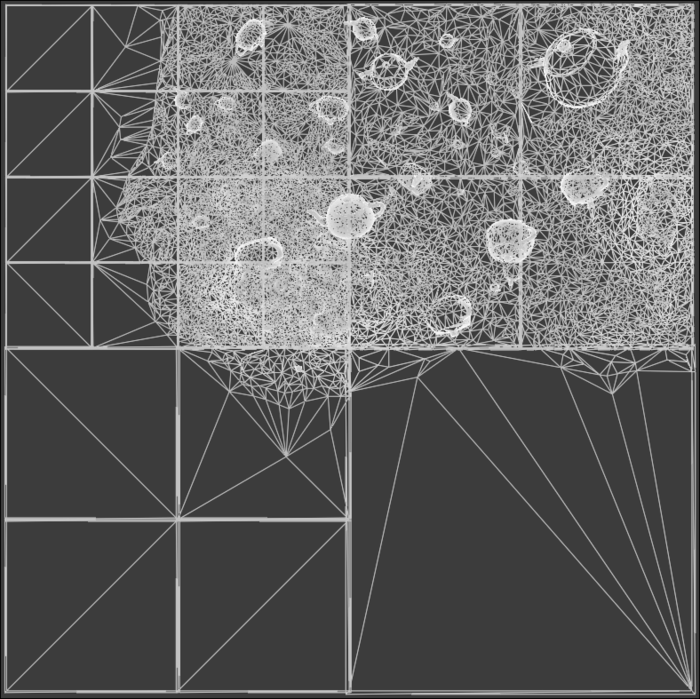
In this example we will discuss how to utilize the remeshing processor for generating a grid of HLOD terrain chunks from a large terrain input geometry. In doing so, we'll go over some basic geometry manipulation, remeshing fundamentals, and advanced usage of some remeshing processor functionality.
No posts match your filters
Try a different keyword, or clear the active filters to see every post.