Blog
When optimization gets practical
Customer stories, technical guides, and deep dives into 3D content optimization pipelines.
Categories
Tags
Search results

Handling alpha clipping with compute casters
In this blog we will have a look at how to create billboard impostors for assets using shaders with alpha clipping. The solution is to introduce a little code snippet using sg_DiscardValue and sg_PreviousValue in every sampler function.

Custom texture casting in Unity
In this post we will look at how to cast textures for custom shaders in Unity using compute casters. This is very useful if you have non-standard shaders that use custom texture channels.
Reuse proxy models with surface mapper
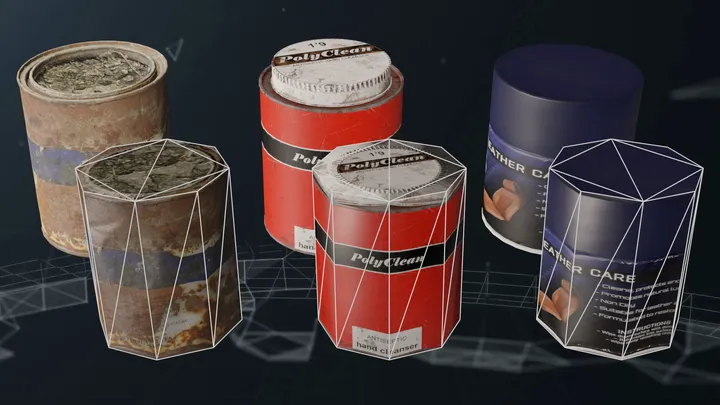
In this blog we'll showcase how the surface mapper enables reusing the same model as LOD levels for multiple models with different topology. It also showcase how you can bake materials to an self supplied proxy model.

Aggregation with multiple output materials
In this blog we'll showcase how to use a mapping image with multiple output materials. This enables you to perform material merging on an asset with both opaque and transparent materials.

Using your own shaders for material baking with Compute Casting
Today we will look at how to create proxies for object with custom shaders. We are going to use compute casters in combination with scene descriptions serialized to xml files to create a batch processor indented to process HLOD meshes. We'll also cover clipping planes.

How to find correct settings for a scripted pipeline
In this post we'll cover how to find the correct settings for a scripted pipeline by exporting a pipeline created using the user interface.

Troubleshooting gamma issues
If you have processed assets in Simplygon and the output had another color shade, then this post is for you. In this post we'll go through how to detect and solve gamma issues.

Use shading network to recreate normal maps
This example show how you can use shading networks to recreate a normal map that had it's blue channel removed.
No posts match your filters
Try a different keyword, or clear the active filters to see every post.